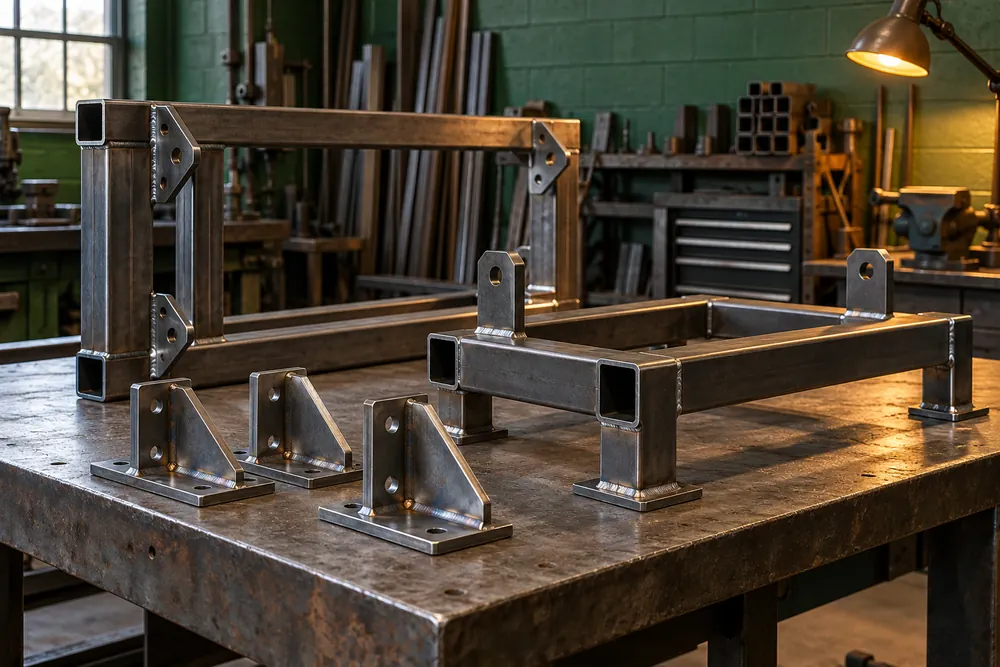
Turning A Requirement Into A Fabricated Part
Metal fabrication brings cutting, shaping, joining and finishing together to make a usable component. Our commercial enquiries range from equipment frames and mounting brackets to protective panels, support assemblies and maintenance replacement parts. A useful starting point is the item’s purpose, not simply its overall size.
Tell us what the metalwork connects to, which loads it must carry and what conditions it will face. A freestanding frame, a wall-mounted support and a machine guard may look similar on a sketch but have different design needs. Clear functional information helps define a suitable material, joint arrangement and finish.
Materials And Connections That Suit The Use
Mild steel is often selected for painted frames and general fabrication, while stainless steel may suit certain corrosive or cleaning environments. Aluminium can reduce weight where its properties suit the design. Material choice must account for stiffness, corrosion, temperature, contact with other metals and the proposed joining process.
Welded construction can give a rigid assembly, while bolted joints may make transport, maintenance or later replacement easier. Ask how the finished item will pass through doorways and reach its final position. Splitting a frame into manageable sections can be more useful than discovering an access problem after finishing.
Commercial Safety And Applicable Standards
For fabrication used as work equipment, the buyer’s suitability assessment should consider the Provision and Use of Work Equipment Regulations 1998, known as PUWER. A custom guard needs consideration of access to dangerous parts, secure fixing and maintenance access. Adding a metal panel does not by itself establish that a machine is safe.
If a fabricated component forms part of a loadbearing construction product, the relevant structural steelwork requirements need separate review. Not all brackets, covers or welded frames have the same regulatory route. For machinery modifications, agree who assesses the effect of the change on the complete machine before manufacture starts.
How The Fabrication Process Is Planned
Start with a drawing, measured sketch or description of the problem. The review should cover quantity, material, critical dimensions, tolerances, fixing positions and finish. Where the item connects to existing equipment, provide photographs with a scale reference and arrange verification of dimensions that cannot be established from the drawing.
After approval, the fabrication sequence normally includes cutting, drilling or forming, joint preparation and assembly. Welding and finishing should be planned to limit distortion and protect the required fit. Inspection points can include hole centres, overall dimensions, mating faces and the condition of edges before the finished parts leave the workshop.
Finishes And Long-Term Maintenance
A coating specification should reflect where the metalwork will be used and how it will be maintained. Painted mild steel, galvanised components and stainless finishes each bring different detailing considerations. Water traps, inaccessible joints and damage during installation can undermine a finish even when the visible surfaces look tidy.
State whether the work will be exposed to weather, washdown, chemicals or regular impact. Ask how sharp edges, welds and awkward corners will be treated. If appearance matters, agree a finish sample or written description before production rather than relying on a colour name to explain texture, gloss and preparation.
What Changes The Price Of Metalwork
Cost depends on material, quantity, cutting and forming operations, the number of joints and the inspection needed. A small bracket with difficult tolerances can take more setting-up than a larger simple frame. One-off parts and repeat batches need different allowances for tooling, drawings and assembly fixtures.
Include installation, packaging, transport and coating requirements in the enquiry so comparisons cover the same work. If you have flexibility on dimensions or joint details, say so before pricing. Our sheet metal fabrication service covers folded panels and enclosures, while bespoke steel fabrication suits items that need more development around a specific commercial use.
Metal Fabrication FAQs
Can You Work From A Sketch For Metal Fabrication?
Metal fabrication can begin with a measured sketch if it explains the function, dimensions, material and fixing points. Sketches are useful for an initial discussion, but critical dimensions and design responsibilities still need confirmation. Where tolerances, loads or interfaces matter, agree a production drawing before any material is cut.
Which Metal Is Best For A Commercial Fabrication?
The best metal for a commercial fabrication depends on the loads, environment, finish and maintenance requirements. Mild steel, stainless steel and aluminium have different strengths and limitations. Describe weather exposure, cleaning chemicals and contact with other materials so the proposed selection can be reviewed against the actual duty rather than appearance alone.
Can You Make A Replacement For An Existing Metal Part?
Replacement metal parts can be considered from a dimensioned drawing or a sample that is safe to inspect. Explain why the original failed and whether the part is safety critical. Copying an existing component without checking its duty can repeat the same problem, so material and design details should be reviewed first.
Technical References
Project requirements should be confirmed by the responsible designer and the appointed fabrication firm.